
Co.Lab, redefined | Catherine Martin on reimagining parquetry for Co.Lab
Author:
Published: 6 November 2026
Academy Award-winning costume and production designer Catherine Martin brings her instinct for pattern, history and world-building to timber flooring. We talk to her about reviving parquetry, drawing on Art Deco and giving designers a new way to make a floor their own.
What made a collaboration with Tongue & Groove feel like a natural fit?
I’d been a customer of Tongue & Groove many years ago in Sydney. They did all of our floors at Iona, a historic home Baz and I used to own in Darlinghurst, and I loved the work. I also love parquet, so the idea of finding a way to make parquet interesting and accessible again was something I was very interested in.
Where did you begin with the collection?
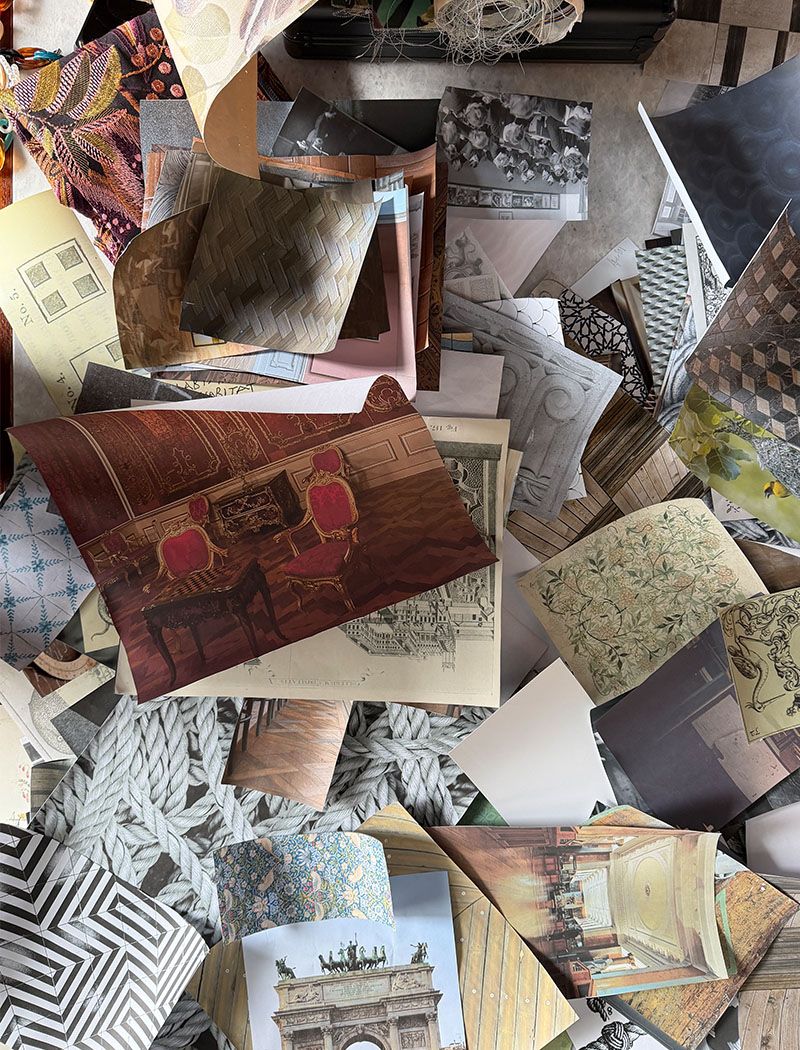
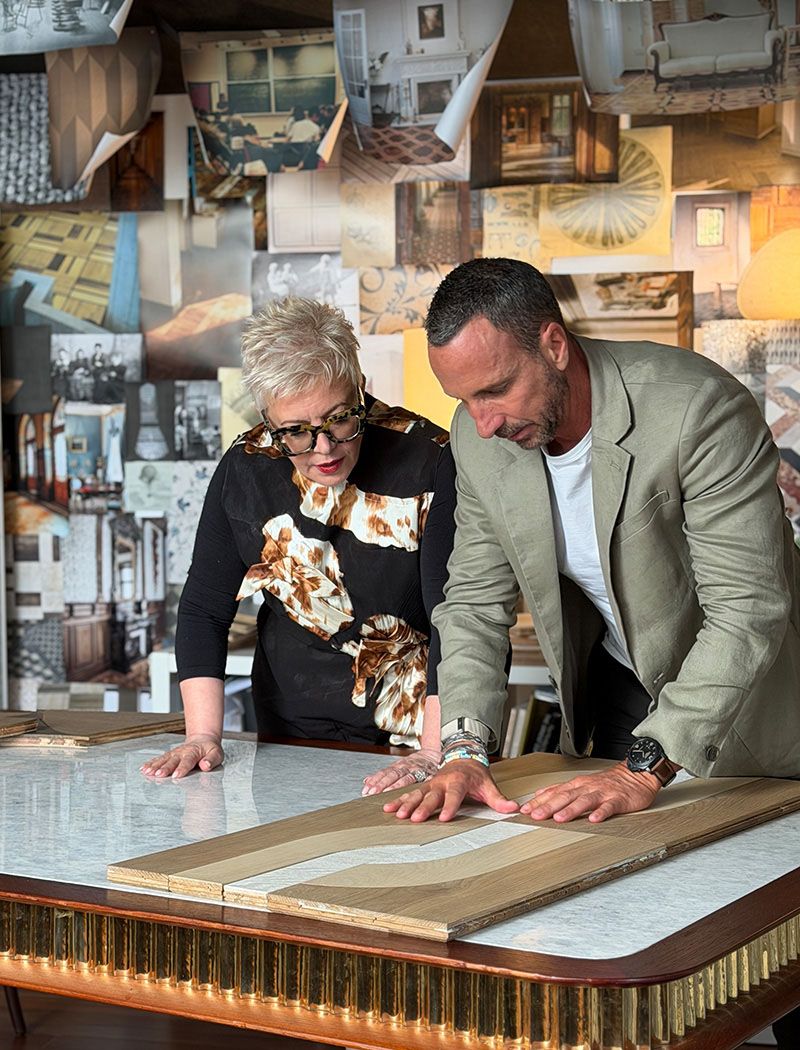
We looked at traditional references, including Versailles parquetry, and then I started looking at tiles, both old and new, from the 19th century through to Art Deco. I became interested in the pattern contained within a square tile and how that could play out over a larger space.
Parquetry was historically about changing the direction of the wood grain to create a tonal, relatively subtle pattern. I wanted to retain that, while also creating something bolder and more contemporary so the floor could have more personality.
How can designers use your collection to play with the pattern?
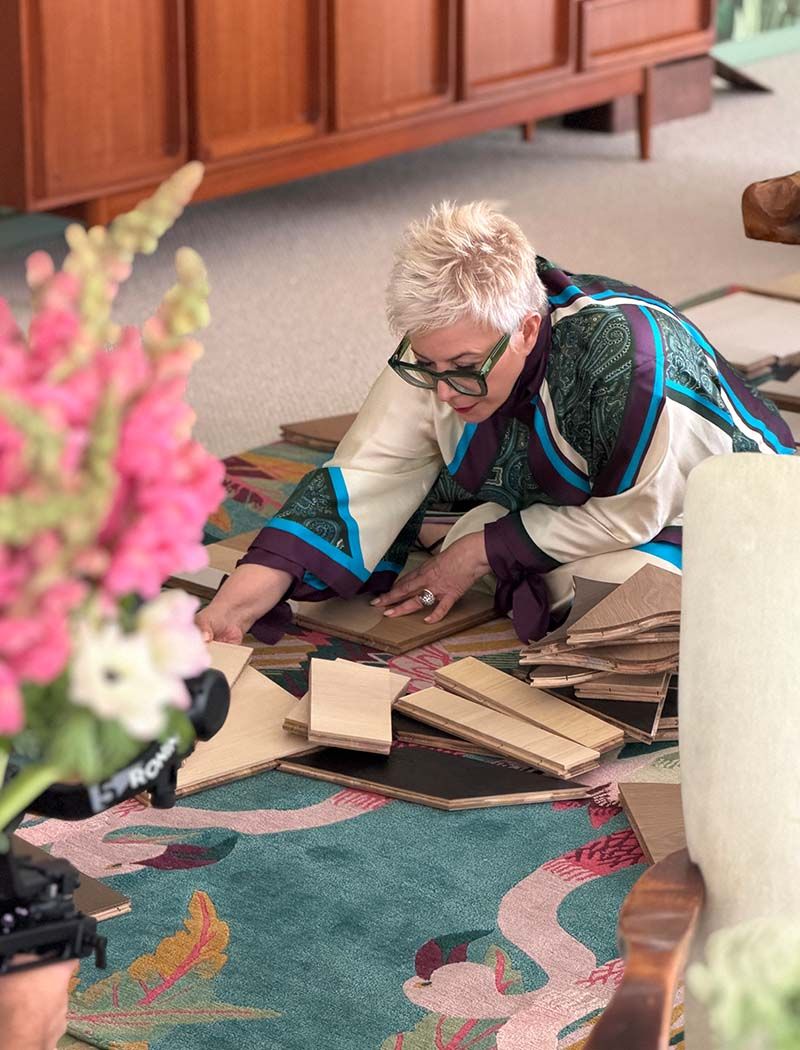
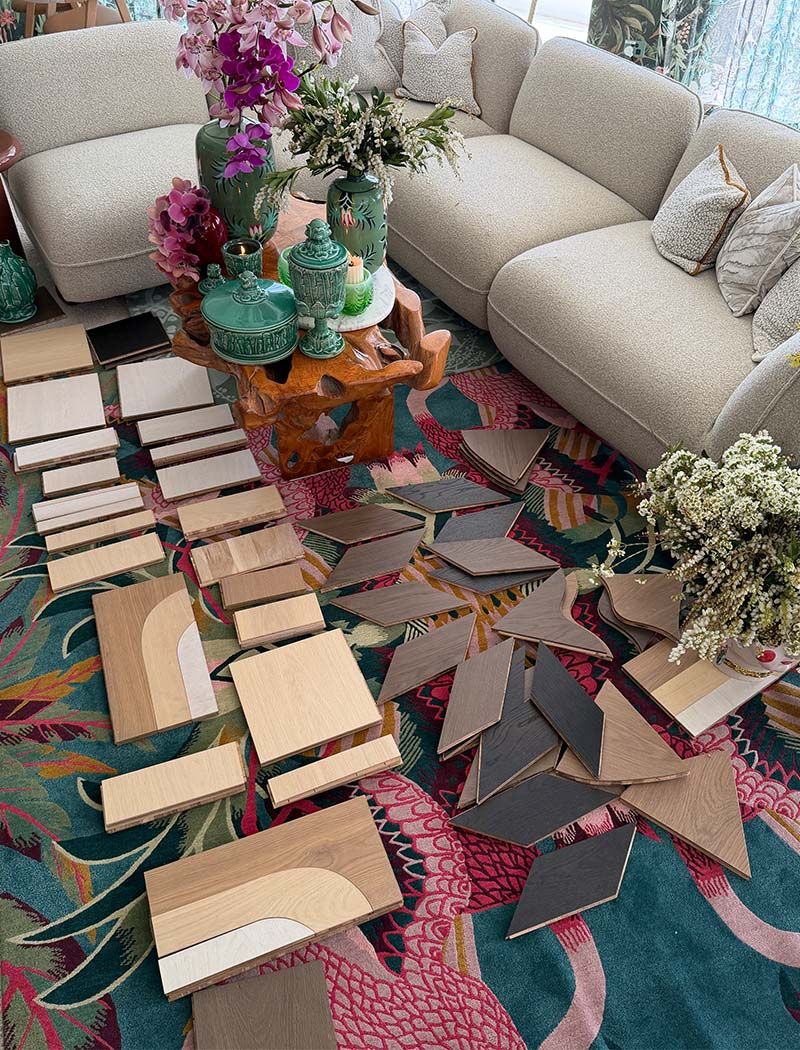
I wanted to play with the way you combine tiles together, allowing designers to endlessly change the pattern so it becomes almost bespoke. With School Room, for example, you can turn the tiles around to interlock in different ways.
The patterns can also be bold and high-contrast or subtle and textural. Even in the same colour, the change in direction of the wood grain means you can still read the pattern. It allows you to dial the expression up or down.

What do you love about working with timber?
Tongue & Groove’s product has all the technology of an engineered floor — it’s stable and performs well acoustically — but it still has the beauty and variation of something natural. No two trees are the same, and wood has a warmth and texture that humans respond to. It’s a very liveable material.
How would you love to see the collection used?
I’d love to see it used in unexpected ways. I’ve been thinking about continuing it from the floor up a wall in the entrance hall of my own apartment. I love the idea of creating a new kind of panelling, or even laying the tiles one on top of the other, so you get dimension.
What references from your own life made their way into the collection?
I have always had a soft spot for Art Deco and Mid-century Modernism. Those periods are almost talismans from my childhood. My grandparents lived in a crumbling Art Deco mansion in France, and I was born in 1965, so the Mid-Century aesthetic is part of my personal history.
In Cable, you can see the full curves associated with Art Deco, Art Moderne and the 1940s ocean-liner style, while the geometric strictness of School Room evokes Modernist lines.

What do you hope designers take from the collection?
I hope they discover a product they can bend to their own needs — something that isn’t imposing an aesthetic, but that allows people to make their own stories in their own homes.
Co.Lab is a pioneering initiative from Tongue & Groove that combines the brand’s precision engineering with the creativity of globally celebrated designers to create extraordinary timber flooring collections. Each collaboration reimagines the possibilities of flooring as a platform for design innovation.
Last updated: 6 November 2026