
Introducing Parterre | Catherine Martin reimagines parquetry with Tongue & Groove in new Co.Lab collection
Author:
Published: 3 November 2026
Tongue & Groove has collaborated with four-time Academy Award-winning designer Catherine Martin on Parterre, a collection of six new parquetry patterns that draws on everything from Art Deco and the work of artist Giorgio de Chirico to schoolroom linoleum, rotary telephone cords and birds in flight. The patterns are designed to be modular rather than fixed, inviting designers to play with colour and geometry to bring their own vision to life.
Martin is a celebrated film, stage and interior designer known for creating richly layered worlds through pattern, colour and material. She brings that same sensibility to the Parterre collection, combining heritage inspirations with a fresh and playful approach to geometry.
“Catherine Martin is an incredibly talented human being,” says Richard Karsay, CEO and founder of Tongue & Groove. “The whole idea of Co.Lab is to push boundaries and create extraordinary collections with creative visionaries. Catherine is a genius and there is a great synergy between her work and our vision.”
“I love parquet, and the idea of finding a way of making parquet interesting and accessible again was something that I was really interested in,” says Martin. “By changing the way that you combine tiles together, you can endlessly change the pattern, so that the pattern in itself becomes almost bespoke to the user.”

Parterre takes its name from the French expression meaning “on the ground”, reflecting a collection rooted in the history of decorative flooring while opening up new possibilities for contemporary interiors. The collection comprises six designs – School Room, Capsule, Cable, Arches, Birdie and Hopscotch – each developed from a distinct visual reference or personal memory.
The Parterre designs are intended to work with both tonal and contrasting palettes, allowing each composition to move from subtle and textural to bold and graphic. Even when specified with a single colour, the pattern remains legible through variations in grain direction, celebrating the natural beauty and character of the timber.
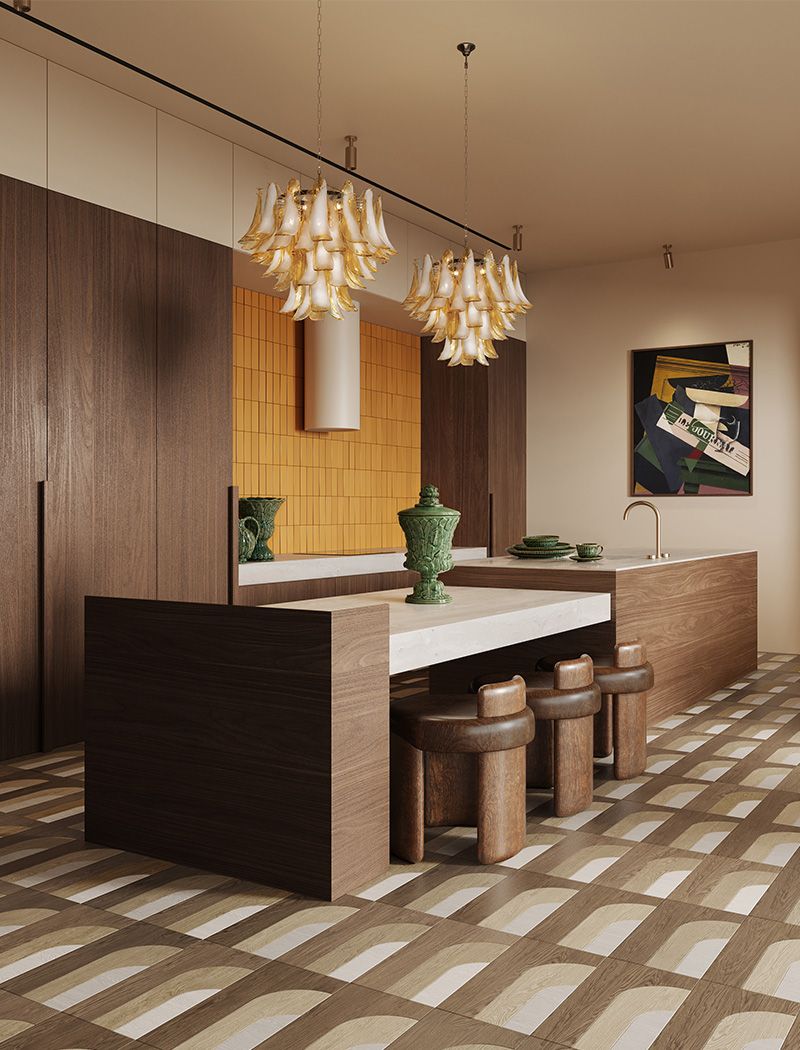
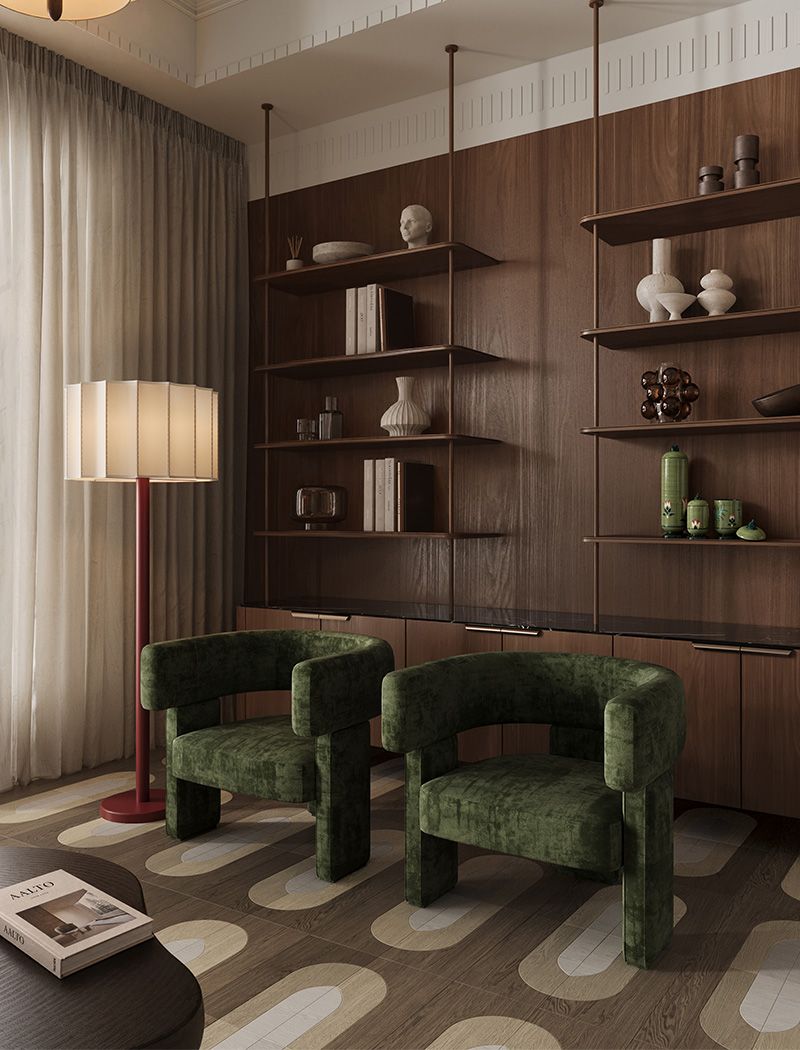
Arches is defined by austere architectural forms that take inspiration by the strict geometry of Giorgio de Chirico’s paintings. “There’s something neoclassical but also surreal about the pattern, as the arches are never quite complete,” says Martin.
Capsule draws on Martin’s ongoing fascination with the rounded forms of 1940s Art Deco. The pattern comprises a series of nested capsule shapes that are architectural and distinctly contemporary.
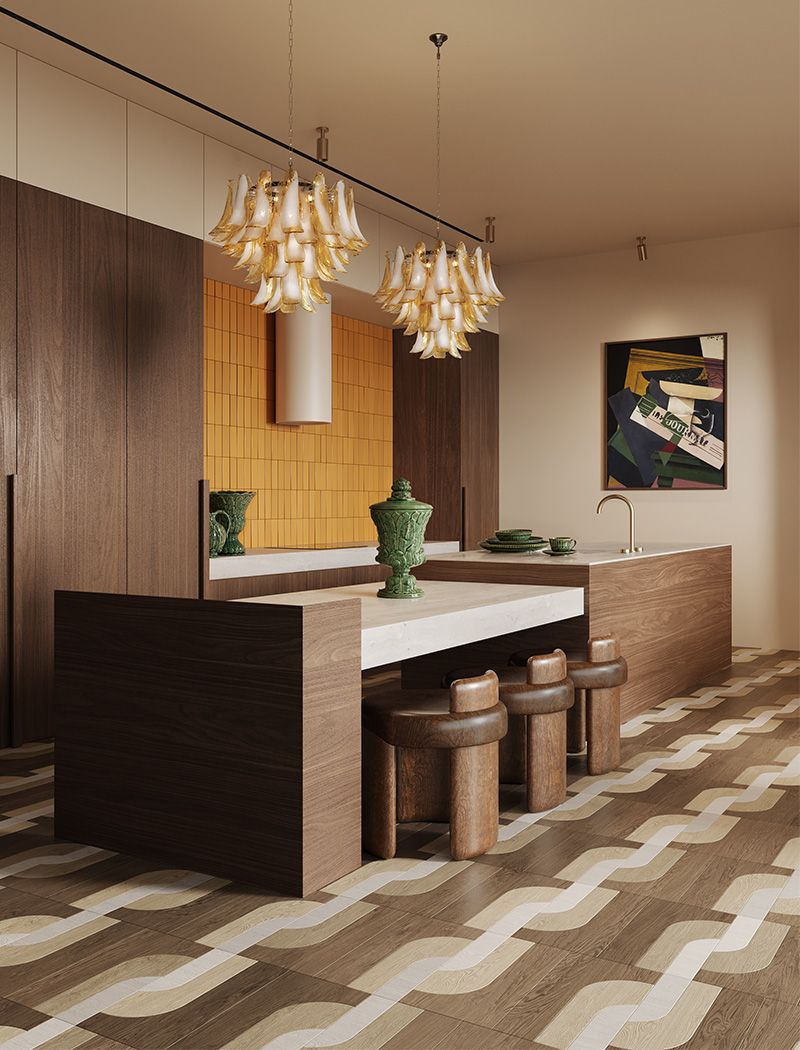
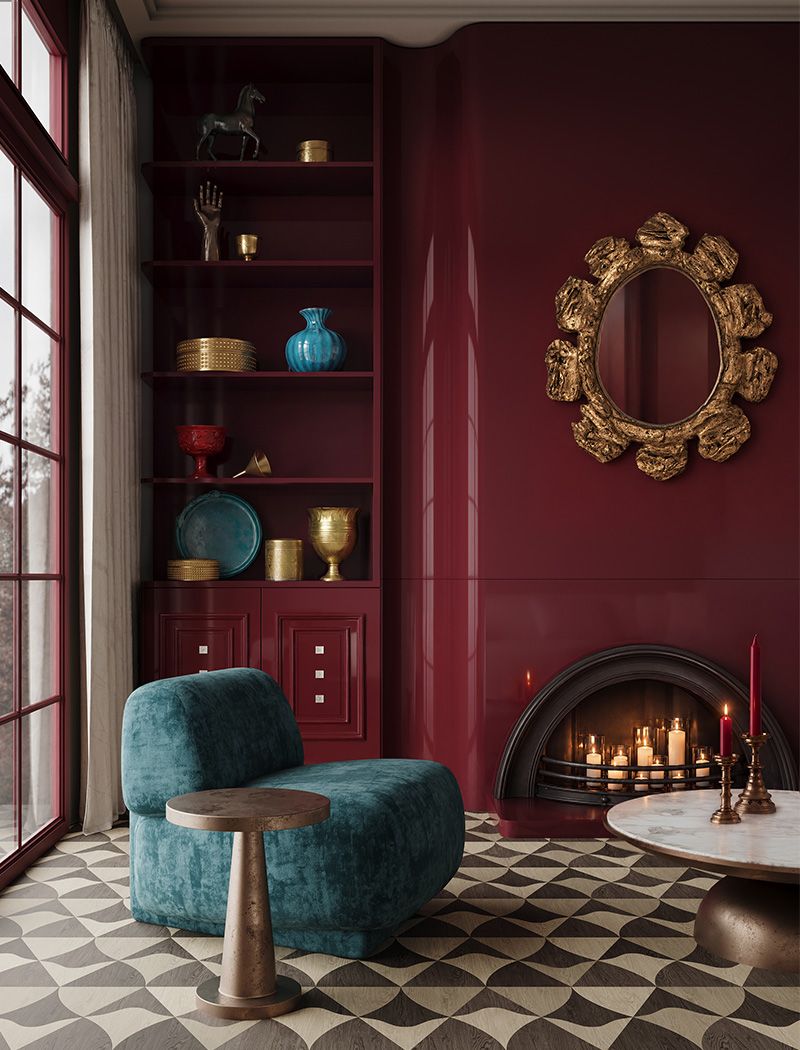
Cable is a nostalgic nod to the curling cord of an old rotary telephone, which is reimagined as a flowing diagonal repeat. “It’s an unexpected form to find underfoot,” says Martin.
Birdie translates Martin’s longstanding use of avian motifs in carpet and fabric design into flooring. “I wanted to translate the silhouette of stylised birds in flight into a parquet repeat and this is the result,” says Martin.
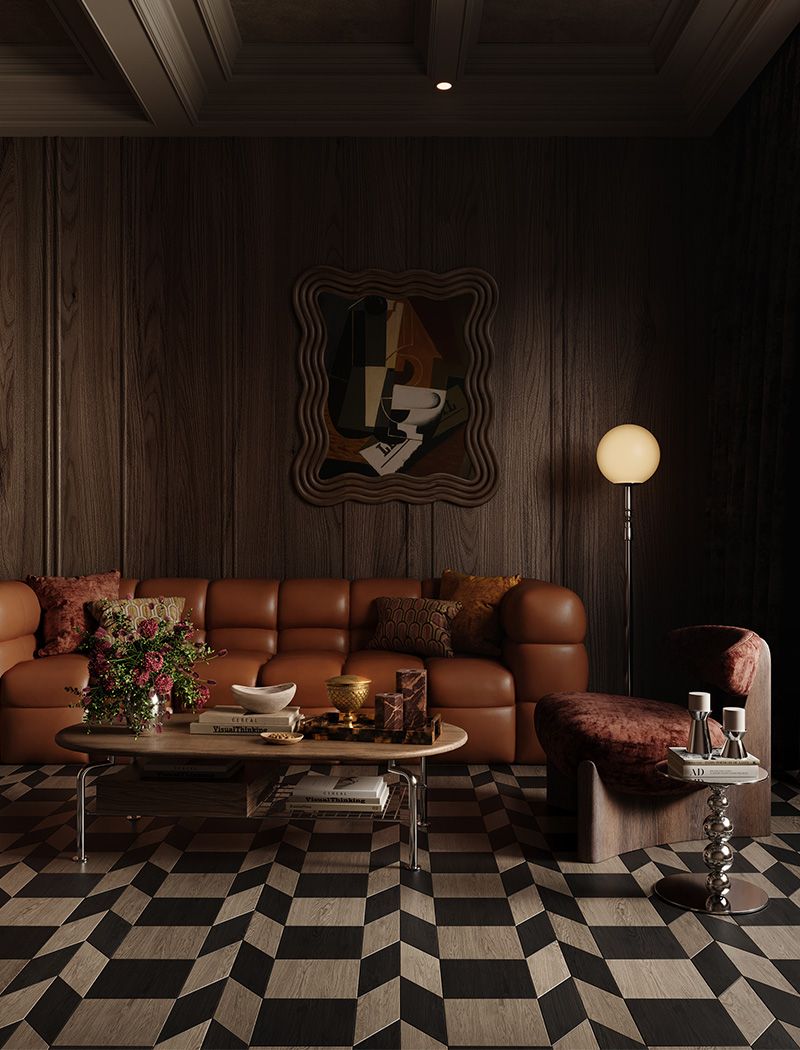
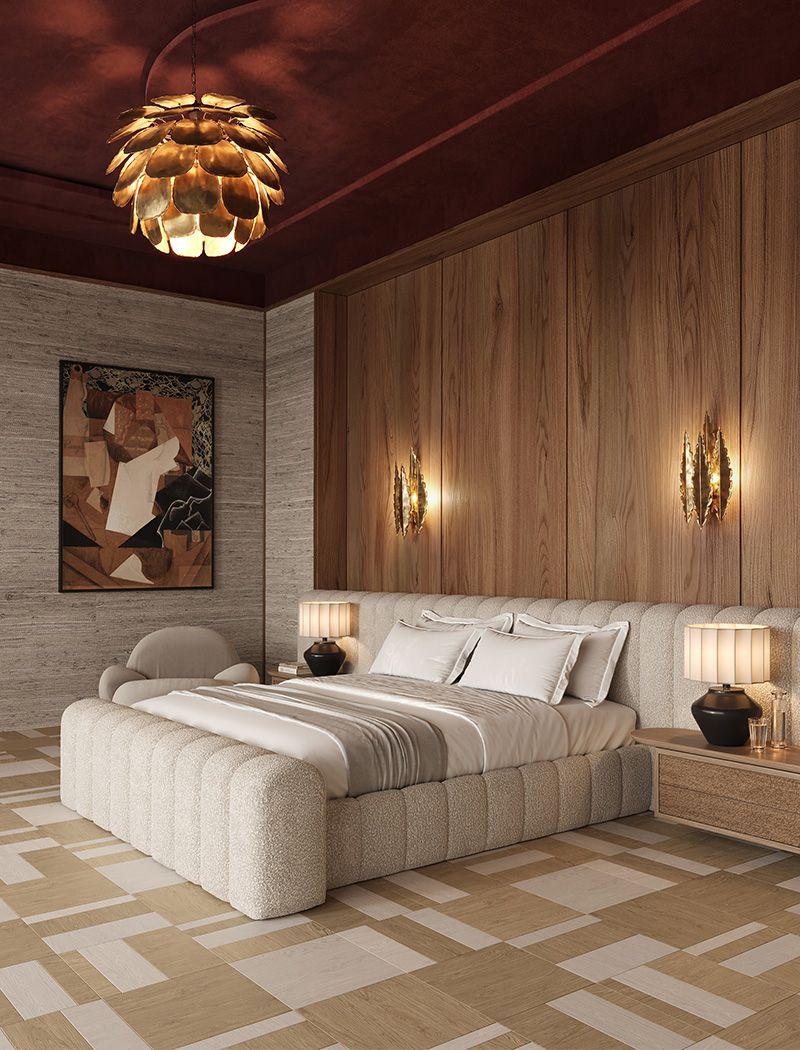
Hopscotch takes inspiration from geometric paving and the childhood game of moving from one stone to the next. “This pattern is a formalised version of that everyday, unselfconscious geometry,” says Martin.
School Room relaxes the strict rectilinear geometry and regular size of traditional parquetry so that the individual pieces can be endlessly reconfigured. “It’s a tribute to my enduring love of traditional linoleum and the tiles I remember from the schoolrooms of my childhood,” says Martin.

The Parterre collection developed through a close collaboration between Martin and Tongue & Groove, combining her creative approach with the brand’s specialist knowledge of timber and manufacturing. Curves, points, tessellations and modular configurations pushed the technical possibilities of parquet production, requiring Tongue & Groove’s highly precise machining alongside extensive hand-finishing and assembly.
Each design is produced using Tongue & Groove’s three-layer solid European oak construction, providing the stability required for the collection’s intricate geometry. Unlike mass-produced flooring, the highly detailed parquet elements require a slower, bespoke manufacturing process, with individual components precision-cut, assembled and finished by hand.
“What I loved about the product was that it had all the tech of an engineered floor, but all the beauty and variation of a product that’s natural,” says Martin. “No one tree is the same. I loved that combination, and also the fact that it has longevity.”

Although conceived as flooring, Parterre has been designed to move beyond traditional applications. Martin envisages the collection travelling from floors onto walls and architectural panelling, allowing the pattern to shape a room more completely.
“I hope that other designers discover a collection that they can bend to their own needs,” she explains. “Parterre is not imposing an aesthetic, but rather allowing people to make their own stories in their own homes.”
“With Co.Lab, we are working with influential creatives to define a new way of thinking about flooring,” says Karsay. “Catherine Martin has put her heart and soul into every detail of this collection, and the end result is beautiful. It’s about transforming flooring from a blank canvas into an opportunity for expression.”
Co.Lab is a pioneering initiative from Tongue & Groove that combines the brand’s precision engineering with the groundbreaking creativity of the world’s most celebrated and visionary designers to create extraordinary flooring collections.
Last updated: 3 November 2026