
Co.Lab’s next chapter | Raw Edges on why tiles look better in timber with GridWork
Author:
Published: 5 August 2026
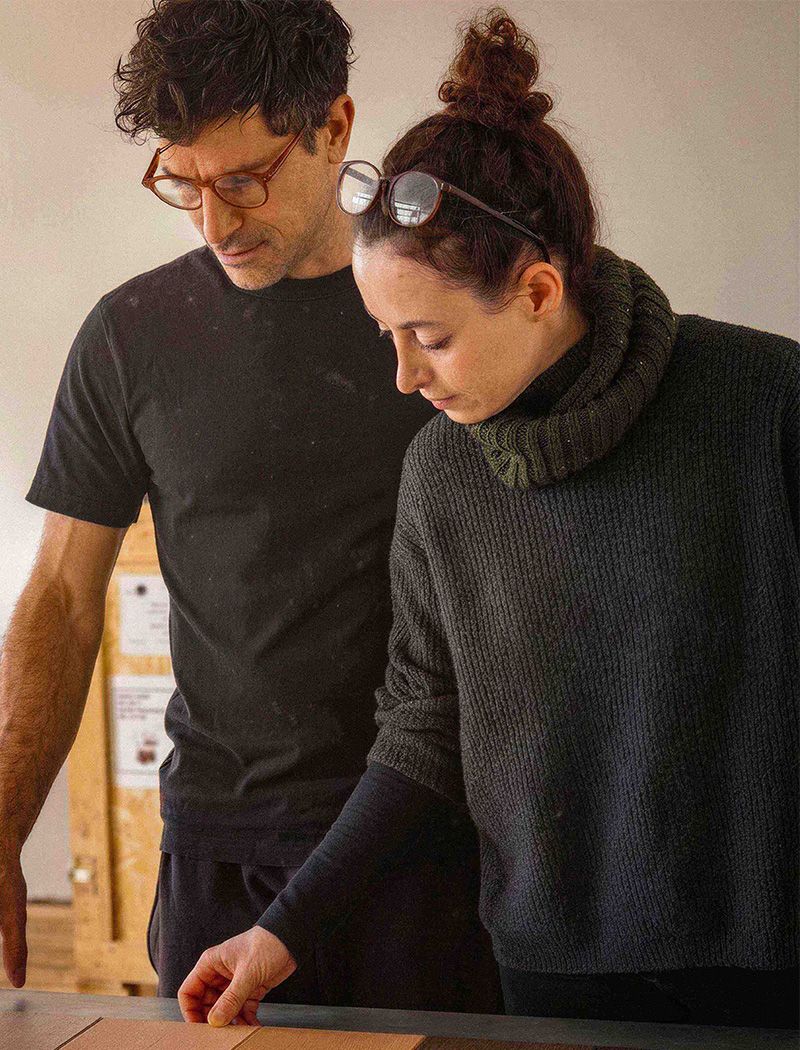
Raw Edges for Established & Sons’ second collaboration with Tongue & Groove’s Co.Lab reimagines the archetypal ceramic tile grid in timber. We talk to Raw Edges co-founders Shay Alkalay and Yael Mer about the inspiration behind the collection and the boldness of simple ideas.
What is GridWork, and where did the idea come from?
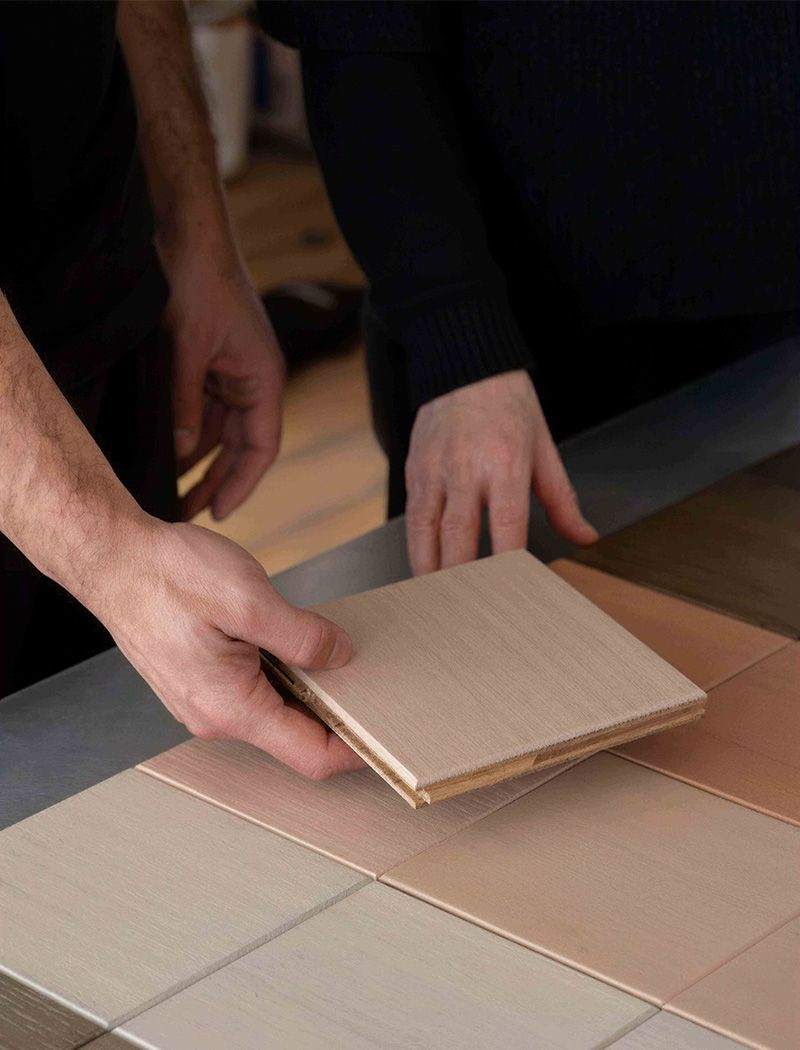
Shay Alkalay: We’ve been dealing with flooring for a long time and our first Co.Lab collection, Wall to Wall, explores the potential of parquetry. For some time, it stuck in my head that you have all these very common parquet shapes, but you don’t have a simple grid. You can find ceramic tiles in simple modernist grids, but timber ‘tiles’ are not a product you can buy and install. It all started with that observation.
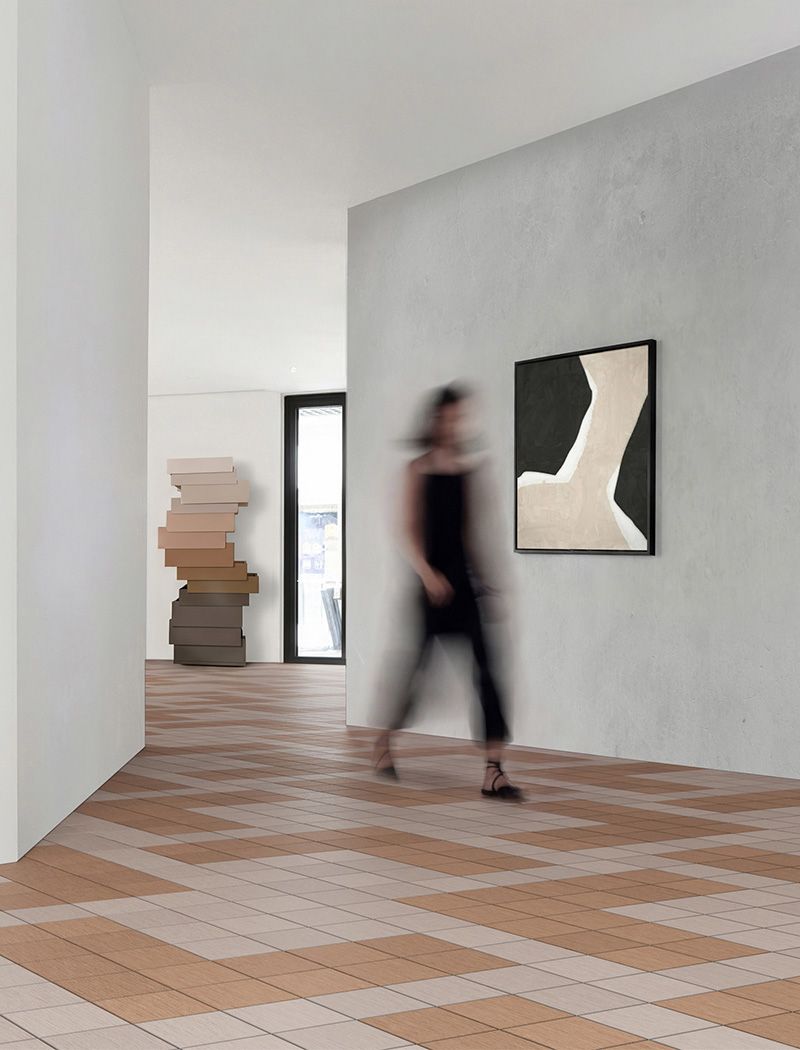
Yael Mer: We love the idea of defining space through borders and colour schemes. Whether it’s in a residential or commercial setting, you can use colour and pattern to create a journey through a space.
What’s the modernist connection?
Shay: Both Yael and I grew up in Tel Aviv, which is a Bauhaus city with minimal Modernist architecture, and that environment really shaped us. When we moved to London, we were drawn to brutalist architecture and lived in the Barbican. So Modernist architecture, like Eileen Grey’s e 1027 villa, is the inspiration. You see these very ordinary grids in stone, terrazzo, clay—but never in wood. We’re essentially translating that idea into timber.
What does timber bring to the simple grid that ceramic or stone doesn’t?
Shay: Wood is such a warm material and it’s so prominent in many places around the world that it just makes sense. There’s also something a bit ironic about it. With ceramic tiles, you see endless imitations of wood, concrete and marble. I thought it was about time wood copied ceramics instead. Let’s do it the other way around and return the favour. It’s almost like an experiment to see how architects and interior designers respond.

What was important in the design and production process?
Shay: Two things were really important for GridWork: that the wood stays as plain as possible—so you don’t have obvious grain and it’s not too rich in pattern—and that the chamfer creating the division between the blocks is very precise. With tiles you have grout, and we wanted to find an alternative that maintains the same clean appearance across the floor.
Can you tell us about the colour palette?
Yael: When we started exploring flooring we were fascinated by the relationship between herringbone flooring and herringbone in textiles. With Wall to Wall, we created patterns that are common in textile but not so much in flooring. We like that idea of introducing color, but still keep the qualities of wood and have continued to explore that in GridWork. When you look closely, you can really see the grain and how beautiful it is.
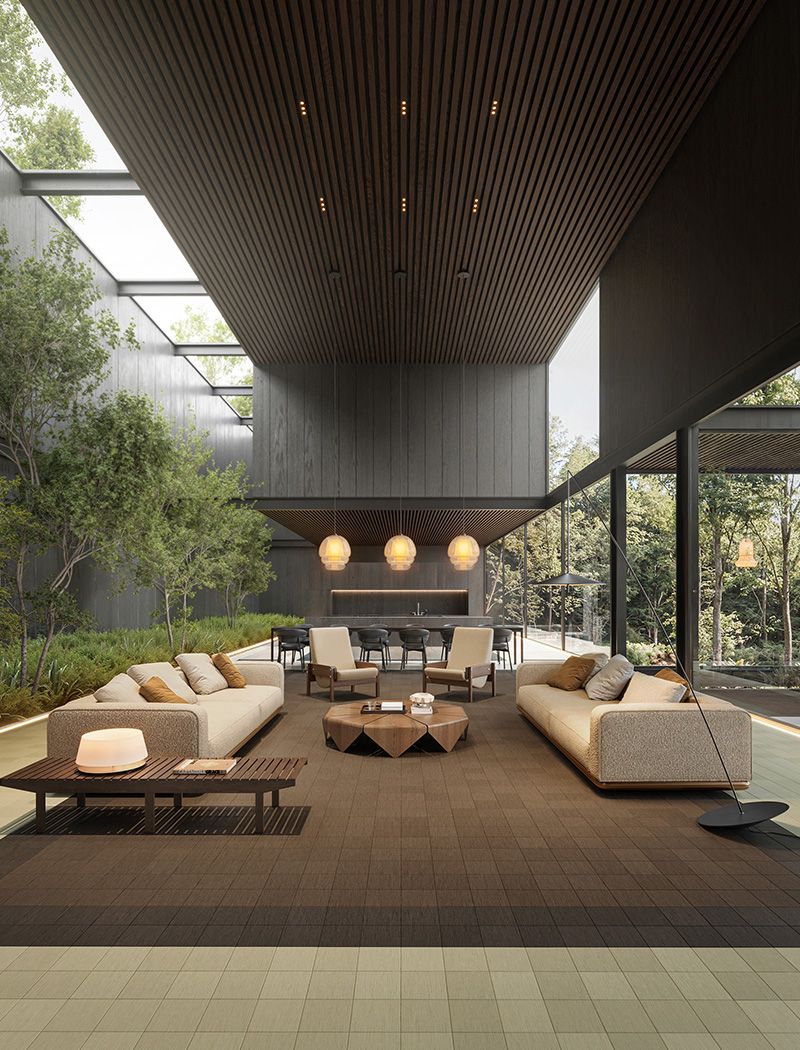
Shay: We wanted very neutral colours that are easy to live with, and then one punchy colour. So we have a strong green alongside greys, warm tones, blush and brown.
How do you imagine architects and designers using GridWork?
Shay: I would absolutely use GridWork in my home. For me, the ideal is one colour as a simple grid. But there are different colours and we want to encourage architects and designers to use the collection more like a mosaic to create patterns. The more complex patterns work beautifully in restaurants, hotels, and larger commercial spaces.
What does it mean to launch GridWork at Milan Design Week?
Yael: It’s very significant because it’s a really unique year for us. We’re reintroducing old classics and launching new products at the same time. We have a long history with Established & Sons, so to be showcasing Wall to Wall and launching GridWork is a really nice celebration.
Shay: When you launch something new—especially flooring—you never know what the reaction will be. We’re introducing a new idea in several colours and putting it into the hands of architects and interior designers. We want to see their reaction and what they do with it.

What excites you most about this collection?
Shay: I’m really excited about this project. It’s probably one of the simplest things we’ve done, but there’s something bold in its simplicity. The modernist Bauhaus grid is one of the most ordinary things you can find—just not usually in wood. The message of GridWork is very straightforward: it’s simple, beautiful and open-ended.
Co.Lab is a pioneering initiative from Tongue & Groove that combines the brand’s precision engineering with the creativity of globally celebrated designers to create extraordinary timber flooring collections. Each collaboration reimagines the possibilities of flooring as a platform for design innovation.
Last updated: 5 August 2026